
An undergraduate or graduate degree in data science can open the door to various jobs in research, business, technology, and academics.
Here are some of the most popular and lucrative roles you can pursue with a data science degree.

An undergraduate or graduate degree in data science can open the door to various jobs in research, business, technology, and academics.
Here are some of the most popular and lucrative roles you can pursue with a data science degree.
Yes, cybersecurity is a STEM degree. Let’s explore how.
Cybersecurity degrees align with all four STEM domains. Here’s how cybersecurity fits into Science, Technology, Engineering, and Mathematics (STEM).
The timeframe for earning a college degree in cybersecurity varies based on program level and format. This post will outline how long it takes to obtain different cybersecurity degrees and provide a synopsis of each type.
Here's a quick summary of cybersecurity degree durations:
Yes, you can pursue an MBA with a computer science degree, and for certain roles, it’s beneficial. Let’s dig a little deeper.
The combination of technical expertise from a computer science degree and business acumen from an MBA is highly valued, especially in the tech industry. This blend of skills is especially beneficial for roles in technology management, product development, and business analytics.
The school where you earn your CS degree matters, but only to a point.
If you attend a tier 1 university for computer science, you’re more likely to get hired at a major tech company and earn a higher salary upon entering the workforce. To illustrate this point, College Transitions identified Carnegie Mellon, Columbia University, Stanford, MIT, and Cal Tech as the top five “feeders” of computer science professionals to tech giants like Google and Microsoft.
A guide to the most valuable CompTIA certifications, broken down by IT career path.
This article will be updated annually with the best CompTIA certifications.

CompTIA certifications have long been a staple for IT professionals looking to solidify their skills and advance their careers. Their global recognition, career-focused subject matter, vendor-neutrality, and respect among employers and workers make them the first choice for many in the field.
But which CompTIA certification(s) should you pursue?
This guide will provide an overview of today’s best CompTIA certifications, organized by IT career path and skill level, to help you decide which credentials are right for you.
ITCareerFinder breaks down the top 4 alternatives to CompTIA’s A+ certification.
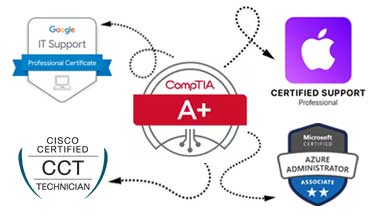
In the rapidly evolving tech space, IT professionals use certifications to show employers that they possess the latest and greatest skills. While CompTIA’s A+ certification remains the gold standard for validating essential knowledge across key IT domains - especially for tech support roles - there exist alternative credentials that offer specialized skill development and unique employment opportunities.
A deep dive into the computer science associate degree, including costs, benefits, curricula, admission requirements, jobs and salaries.

In an increasingly digital world, the demand for professionals with a solid background in computing and information technology is soaring. An associate degree in computer science can be your launchpad to a rewarding career in this field.
A computer science associate degree is a 2-year undergraduate program that typically includes coursework in programming, algorithms, data structures, computer architecture, and mathematics. CS associate degrees offer a strong foundation for students who wish to pursue a bachelor's degree in computer science or begin an entry-level IT career directly after completing the program.
This article will provide an in-depth look at computer science associate degrees, including marketable classes, costs and benefits, potential career paths and salaries. We’ll also highlight some of today's best online computer science associate degrees.

SNHU provides affordable online technology degrees respected by employers and universities nationwide.
Featured Online Degrees: